
“Remake, Not Replace” — Why Tsukihime (2000) is Still Worth It

From Doujin Soft to Home Console
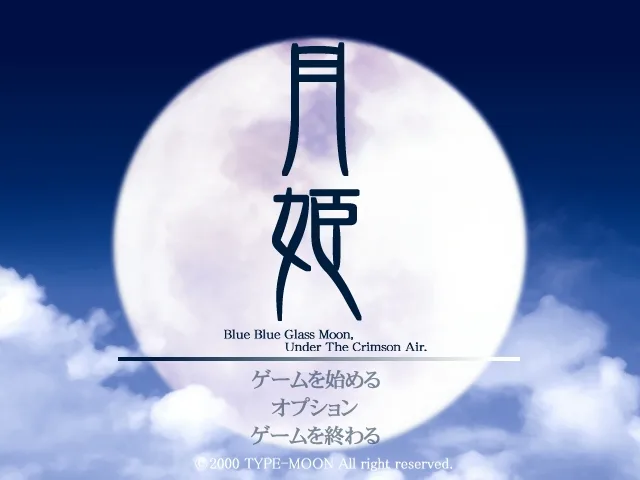
In the world of visual novels, there’s few rags-to-riches stories quite like that of Type-Moon and their history with the medium. After writing a series of light novels in 1999, writer Kinoko Nasu and artist Takashi Takeuchi would team up alongside programmer Nobuyuki Kiyotake and composer Keita Haga to create the doujin circle known as Type-Moon. Under this name, they would release the visual novel Tsukihime (月姫, meaning “Moon Princess”) in 2000. It was a resounding success, and was followed up by two fandiscs released in 2001.
While Tsukihime and its fandiscs were successful, as well as cult classic fighting game spinoff series Melty Blood enjoying enduring love, it never got the same treatment that its younger, more successful brother Fate/stay night did. Fate saw immediate universal acclaim amongst otaku, with multiple extremely popular anime adaptations to boot. However, throughout Type-Moon’s extensive and sometimes confusing history of Q&As and interview snippets, one idea has endured ever since its first fandisc, to the point of being a running joke: “There’s going to be a Tsukihime remake that will release with overhauled graphics and music!” Lo and behold, in 2008, Type-Moon would announce that they were going to start development on the remake of Tsukihime in the coming years.
However, this would prove to be troublesome.
As quickly as they announced the Tsukihime remake, in 2013 they announced it was being put on hiatus due to the company’s work on then-upcoming fanbase punching bag Fate/Grand Order, which would soon inherit much of the company’s resources. Indeed, it would not be until 2020 that we would suddenly get a new promotional video for the project, now boasting the subtitle -A piece of blue glass moon-. It would release in Japan in 2021 of the following year on PlayStation 4 and Nintendo Switch. Tsukihime had broken free of its doujin roots and was now on modern consoles! The Fate series had done this before in the past, but Tsukihime was different, it wasn’t simply a remaster, but a complete ground-up remake. Featuring updated visuals, new characters, new storylines, and a jaw-dropping 96 songs, nearly ten times the number of songs featured in the original. It would take a few years, but eventually -A piece of blue glass moon- would release worldwide with English and Chinese language support, with Korean language support to follow soon.
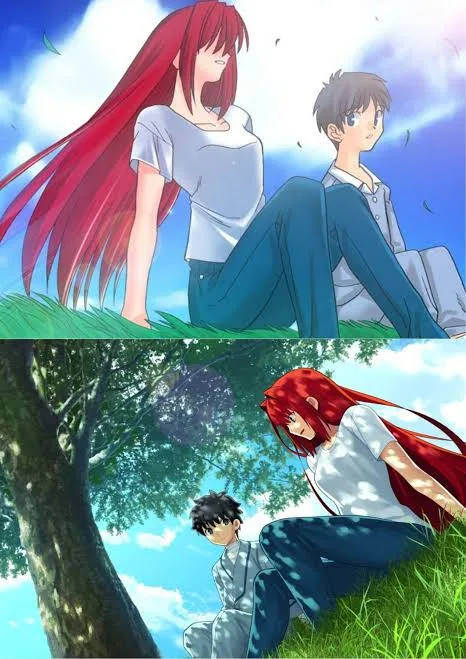
A comparison of one of the opening scenes in Tsukihime (2000) and its remake Tsukihime: -A piece of blue glass moon- (2021). An art style can change a lot in 20 years, and Takashi Takeuchi delivers a number of gorgeous CGs and character portraits for both, showing his art’s lasting power amongst diehard fans and casual readers alike.
More Than Just a New Coat of Paint
Having been in and out of development hell for almost a decade, -A piece of blue glass moon- is far more than just the original Tsukihime with new visuals, music, and character designs. It’s a new story, an opportunity for Nasu to revisit an older work of his and reflect on his growth as a writer and as a person by creating a new narrative in a modernized setting. While many major plot beats are shared between the two, its new characters and storyline are what make -A piece of blue glass moon- extraordinary. It becomes very apparent early on that even if it tries to stay faithful to the original, this is a new story separate from the seminal classic’s more condensed one, a story that plays to its own strengths instead of relying on the original’s framework. While much of the main heroine Arcueid Brunestud’s route stays intact, relying on the original memorable experience her story had (the biggest notable change being the incredibly well-named Dead Apostle Ancestor Nrvnqsr Chaos being replaced by a new Ancestor by the name of Vlov Arkhangel), by the time you’ve gotten into Ciel’s route the story has taken many twists and turns to introduce new characters to the reader as well as contradict the original story in ways that imply the future will play out far differently, creating what’s essentially a new story exploring both the original and new cast of characters alike.
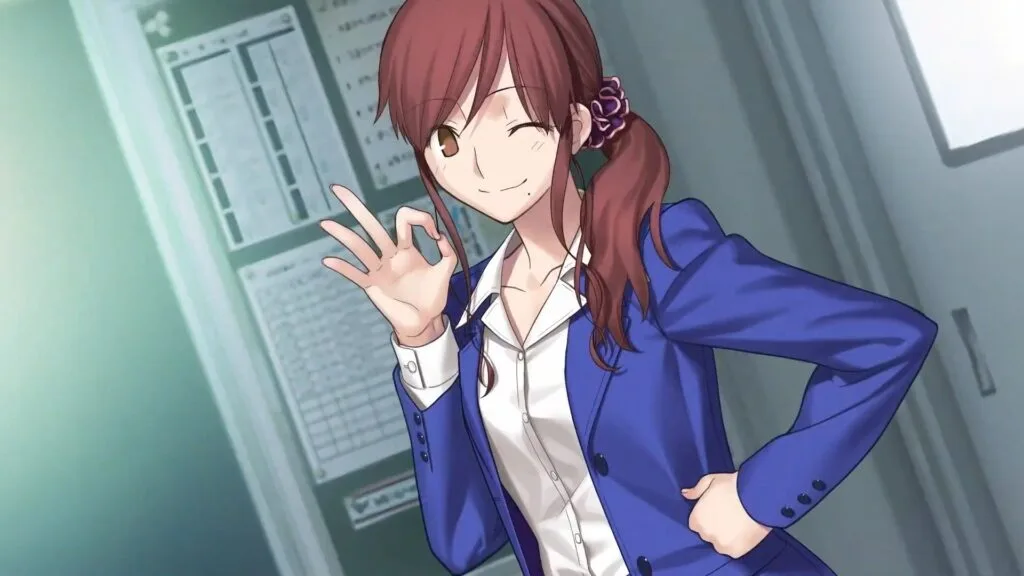
-A piece of blue glass moon- is populated with many new characters who were not present in the original, such as fan favorite Noel, who becomes protagonist Tohno Shiki’s school teacher early on and has a notable presence in the remake’s Ciel route.
There is, of course, a problem.
Tsukihime: -A piece of blue glass moon- is not the whole story.
The unavoidable truth is that this remake did not release as one complete entry. -A piece of blue glass moon- may have a read time as long as the original Tsukihime, but it only covers the Arcueid Brunestud and Ciel routes. The original Tsukihime has five character routes in total, with heroines Arcueid and Ciel’s route making up what is called the Near Side of the Moon routes, whereas the heroines Tohno Akiha, Hisui, and Kohaku’s routes make up what are called the Far Side of the Moon routes. The distinction is important to both the content of the routes as well as their themes and atmosphere. It’s very clear that this split was made with this dichotomy in mind, meaning that, for as great as -A piece of blue glass moon- is, it is not the whole picture. Upon 100% completion a teaser is unlocked, showing a brief visual for Tsukihime -the other side of red garden-, the second half to the Tsukihime remake series, which has not been given a release date.
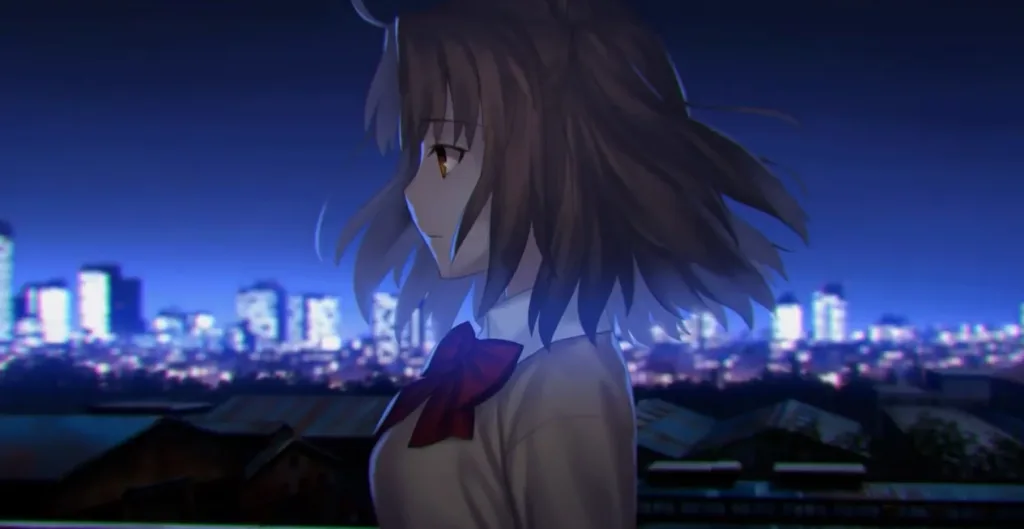
With all of this info presented you may initially think that it’s better to simply wait for the second half of the remake series to release. -A piece of blue glass moon- is a phenomenal work, and surely -the other side of red garden- will be just as great, if not better. After all, heroines Akiha, Hisui, and Kohaku are all extremely beloved amongst fans of both the original and for their presence in the remake. However, there are two issues with this thought process:
The first is that Type-Moon does not care about pressure from fans, or having a consistent release window.
Any fan of Type-Moon will tell you that this company releases things when it feels like it, without exception. Remember how long it took for -A piece of blue glass moon- to release. On top of that it’s been five years since its release, and fans have been given no further substantial information on -the other side of red garden- other than confirmation that it does, actually, still exist and will eventually release. Some of us are holding out hope on it being soon, thanks to the recently announced Melty Blood: Twi-Lumina, which seems to take more cues from Tsukihime’s underappreciated fandisc Kagetsu Tohya, hoping that this is a sign that it’s nearing completion. But that’s besides the point, we don’t yet have the full experience, and if you want the most complete Tsukihime experience, the 2000 original has you covered.
The second is that no matter how good the Tsukihime remake series is, it will never replace the original work.
Less Does Not Mean Lesser
The power of a passion project is something to behold. Tsukihime, for its simplistic development on NScripter, with its limited selection of backgrounds and portraits, absence of voice acting, its sparse selection of only ten music tracks, and for us English speakers a particularly rough fan translation by fan group mirror moon, is still a phenomenal experience over 25 years later. It speaks volumes to the vision that Nasu had that even with a gorgeous remake, the original Tsukihime manages to move me in a way nothing else can. There are a lot of design choices that a lack of a budget creates, choices that succeed at forging an atmosphere that feels both ethereal and transient, an atmosphere I have yet to see recreated in anything else besides perhaps Tsui no Sora.
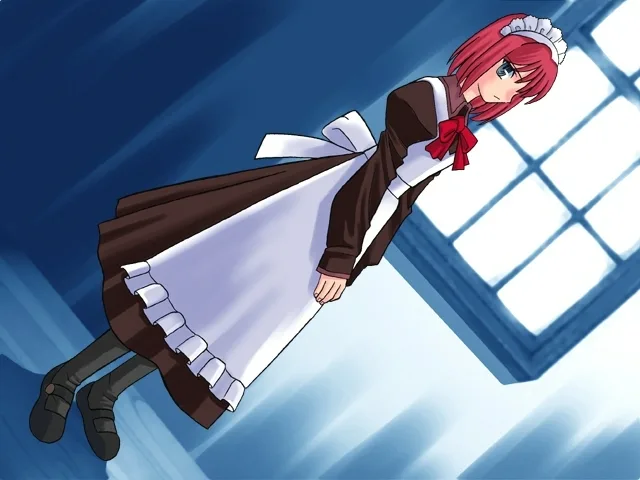
Perhaps the most controversial of these is the aforementioned ten total tracks of music, one of which only plays during the staff roll, and the other reserved specifically for erotic scenes. I won’t blame anyone for wanting more than the eight tracks that play repeatedly, but I think this limited selection of tracks creates a sense of familiarity and safety. The gorgeous piano MIDIs that play during Tsukihime’s quiet or subdued moments deserve a special shout-out. It’s hard to describe the feeling they elicit, but they bring to mind an image that everything happening is being seen through a window or looking glass, in a place far away. Getting used to hearing certain tracks at certain times of day, or with certain characters, feels almost like an old friend who you can expect to hear from every day, although that may just be my nostalgic bias for the VN talking. You start to take comfort in the more relaxed tracks, and know to tense up when other tracks start playing. It starts to feel almost like home, in a strange way.
Another, more underrated aspect, are the stretches during the novel when no music plays at all. At several points in Tsukihime the music will screech to a sudden halt, as if everything has suddenly frozen, and the tension is through the roof. Some of these scenes will play the sound of a heart beating in the background, but many times you are left completely alone. Just you, and the scene in front of you that’s about to unfold.
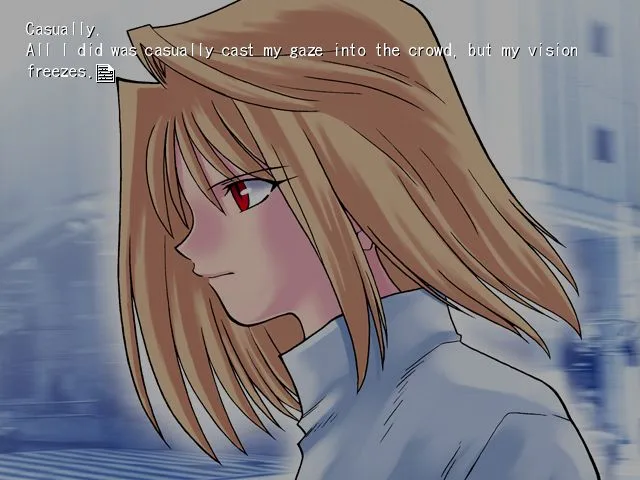
These moments of total silence, only broken by the occasional heartbeat, or the sound of a metal blade ringing out in the dead of night, create a uniquely intimate and intense atmosphere that I find myself enjoying greatly as I go back to Tsukihime, even after having read visual novels with far more budget and flair. The remake’s plethora of tense, heart-racing tracks are by no means bad, but the audiovisual experience it provides is starkly different.
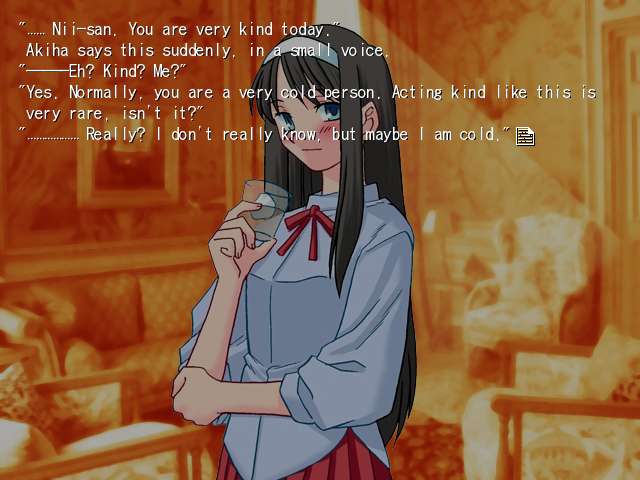
A seemingly small decision that has a large impact on the atmosphere is the fact that nearly every single background is not only a photograph of a real place, but it is draped in one of three colors: a bright sky blue, a deep intimate orange, or a nearly black dismal blue. The sky blue backgrounds tend to be the “default” color of scenes. Orange backgrounds are typically reserved for scenes that take place in the evening, and the dark blue are exclusively reserved for the scenes in the dead of night, where trouble lurks around every corner. It may be drab to some, but I honestly couldn’t imagine Tsukihime without it. I’ve always attributed the large amounts of blue present within the backgrounds to the ever-present theming of the moon, and its supernal presence across the entire story. Regardless of its importance, I have always felt that it too adds a sense of “homeyness” to the visuals you grow accustomed to. The consistent aesthetic provides an artistically uniform way of showing Tsukihime’s world through its romantically distorted lens.
Similarly, the orange gradient over the photos, often reserved for evening scenes, sets an intimate and often melancholic tone to many of the scenes it’s reserved for. Evoking a nostalgic longing for things to have stayed the way they were forever.
Different Stories, Different Characters
Unfortunately I find that many people struggle to understand that a remake begets a completely different experience than its source material. I don’t mean just the aforementioned visual differences, but also the narrative itself. As discussed before, Tsukihime -A piece of blue glass moon- is a story that isn’t concerned with being faithful to the original, and that’s a good thing. Not only does it allow for new stories with familiar faces to be told, but it also functions as a way for writer Kinoko Nasu to reflect on his years as a writer. This can also provide a wonderful opportunity for us, as readers, to indulge in multiple iterations of the same concept.
No matter how good -the other side of red garden- ends up being, it’s also certainly going to be a fundamentally different story than the original, and it just so happens that the original Tsukihime is an utterly phenomenal, gut-wrenching work that reflects on life, death, and the very concept of humanity itself. Myself and many others have been moved by the plethora of thoughtful and heart-wrenching scenes that litter every route. While Arcueid and Ciel’s routes are utterly phenomenal, I believe Tsukihime really hits its stride in Akiha’s route (the best one in the VN, by the way!) and beyond. Where the focus shifts from the supernatural shenanigans of Arcueid and Ciel to unravelling the history behind Shiki’s past and the history behind the Tohno Mansion and its residents.
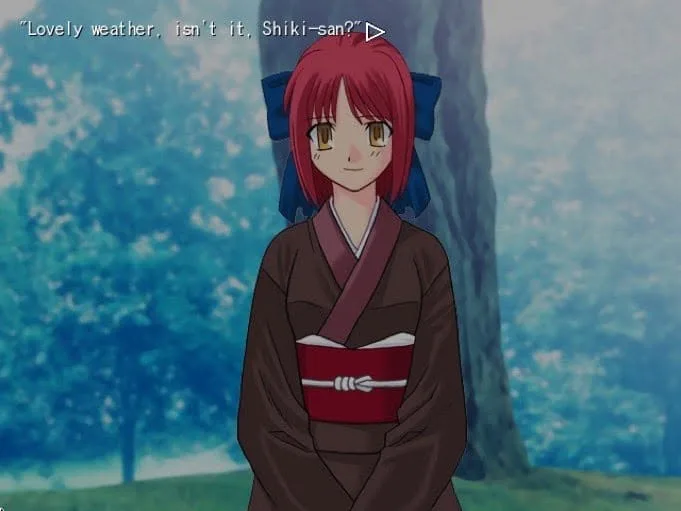
It’s difficult to discuss the specifics of any of these routes without delving knee-deep into spoiler territories. I could write endlessly about any of these routes, or even specific moments, because really they’re just that good. While there are definitely some moments that may feel rushed or amateurish, it’s undeniably part of Tsukihime’s charm at times, and that earnestness is what shines through above all else.
Eclipse
Tsukihime is probably the single most important work of fiction to me. It changed my life for the better, and is why I am here the way I am now. It’s been a recurring monolith in my life ever since I read it almost ten years ago, and for it to still be affecting so many new readers even so long after its release warms my old, dead heart like nothing else in the world.
That’s why it hurts so bad to see how it’s routinely snubbed by Type-Moon and even some of its fanbase.
There is no official way to download the original Tsukihime. There isn’t a single English release for it. Type-Moon rarely acknowledges the original, and I find that unfair. Outside of the Tsuki-Bako package released in 2003, it has never received an official rerelease. This is beyond unfortunate, as even Fate/stay night and Fate/hollow ataraxia eventually received a reprint of their original 18+ versions. While true that most of their efforts have shifted towards promoting the remake series, it still is a huge shame that the original isn’t available through any legal means.
That’s where we as fans step in.
Thanks to fan efforts now more than ever there are much easier ways for fans to read Tsukihime. For the original, classic experience, you can go to Read Tsukihime, a website created by Twitter user @kohakudoori to get the original story and its two fandiscs, as well as the official links to the remake series to support Type-Moon and Tsukihime.

Another more accessible method would be the unofficial web browser edition of Tsukihime, created by GitHub user requinDr. This version of Tsukihime has tons of customizable features and settings to make the reading experience as solid as possible for anyone. It works on both desktop and mobile browser, and you can keep a save file handy to transfer between the two. It even includes a flowchart and scene select, two things that are absent from any version of Tsukihime.
Thank you for taking the time to read why I believe the original Tsukihime is a masterpiece still worth your time. Whether you’ve never read it, or you’ve only read the remake, I hope that this has made you consider checking it out, and I hope that it affects you as much as it affected me.
If you enjoy our work, please follow us on Twitter, Instagram and Facebook for more visual novel content and join the community in our forums and discord server: we’re pretty active there! In addition, you can also support us on Patreon or by buying us a Ko-fi.
Discussion Discuss on the forums
[Comment threads load from the live post; not reproduced in this preview.]